- Comic Frontier
- Posts
- Drome's Jesse Lonergan Shows How It Was Made - On The Page
Drome's Jesse Lonergan Shows How It Was Made - On The Page
A look behind how Drome was made!

Liam McGuire
January 05, 2026
Jesse Lonergan is an American-born comic creator known for his unique art style, often grid-filled, that defies structure and challenges conventions of the medium. His work includes the currently releasing Miss Truesdale and the Rise of Man (with Mike Mignola), Hedra, Planet Paradise, and his most recent work, the critically acclaimed Drome — the latter was named one of the best comics of 2025 by many publications, including us!
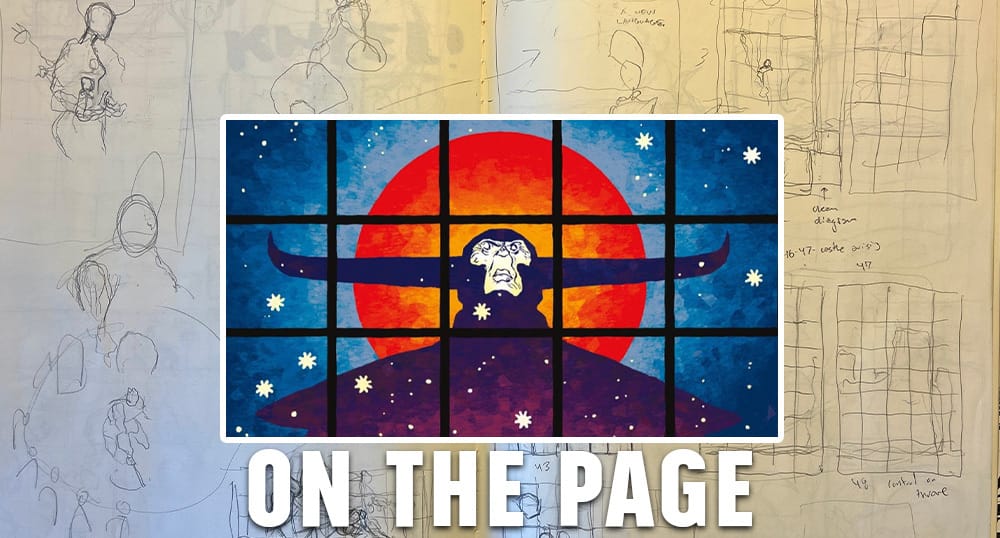
Lonergan’s Drome (specifically pages 40-46) is the subject of the new On The Page series at Comic Frontier. The series will be a conversation with artists/writers about how they made specific pages, panels, covers, scripts and more with behind the scenes insight, photos and more! Check out the debut entry below.

Drome was a project that was years in the making - how did this book get made, and how did you approach it versus your other works?
JL: I started producing finished pages for DROME in the summer of 2020, but I'd been thinking about it for a while before then. It was the personal project that was in the background while I was doing paid work for the last five years. I'd try to produce two finished pages a week and post them on Patreon. It was a slow, chipping-away process on a book that ended up being over three-hundred pages.
I don't think the approach was that different from how I approach most of my solo projects, but that approach is different from how I approach paid work. My solo stuff is just for me, and I think as a result it's much looser. How long will I work on it? As long as it takes. How many pages will it be? However many it needs. Does this page work? Yes. Would it work better if you redrew it? Yes. Are you going to redraw it? Yes. That kind of approach just doesn't really work when you're working with writers and editors and pitches and deadlines and all that.
Starting with the first couple of pages of this study, what's your creative process? How much of it is scripted versus what shows up in the final product? How much improv goes on within the page? What stood out here? What did you want to say?
In general, I try to leave as much freedom and decision-making as possible for the next stage of the process. I think maybe this makes the most sense with pencils, where if I really finish the drawing in pencils, it's very hard for me to ink it because there is no decision-making left to be done with the ink. So with pencils, I try to keep it minimal, getting the broad shapes and composition, but leaving most of the work to be done in ink. But I think this holds true with writing too, so I try to write as little as possible, really just an outline, and then figure out the page breakdowns, sequences and beats in the layout stage. In the layouts, I really am just trying to figure out the composition of the panels on the page. I rarely draw much in the panels of the thumbnails, I'll figure out how to draw what's in the panels in the penciling stage.
With this sequence, it was originally drawn as just two pages, with Blue guiding the people; her teaching the concept of simple tools as a metaphor for civilizing them. But when I read through the book after I had finished it, I felt like Blue's relationship with the people hadn't been established enough, and I wanted to emphasize her role as a protector, so I went back and added sequences of her fighting off beasts while the people are constructing the city. One of the benefits of using the grid is that it's easy to slot things in.
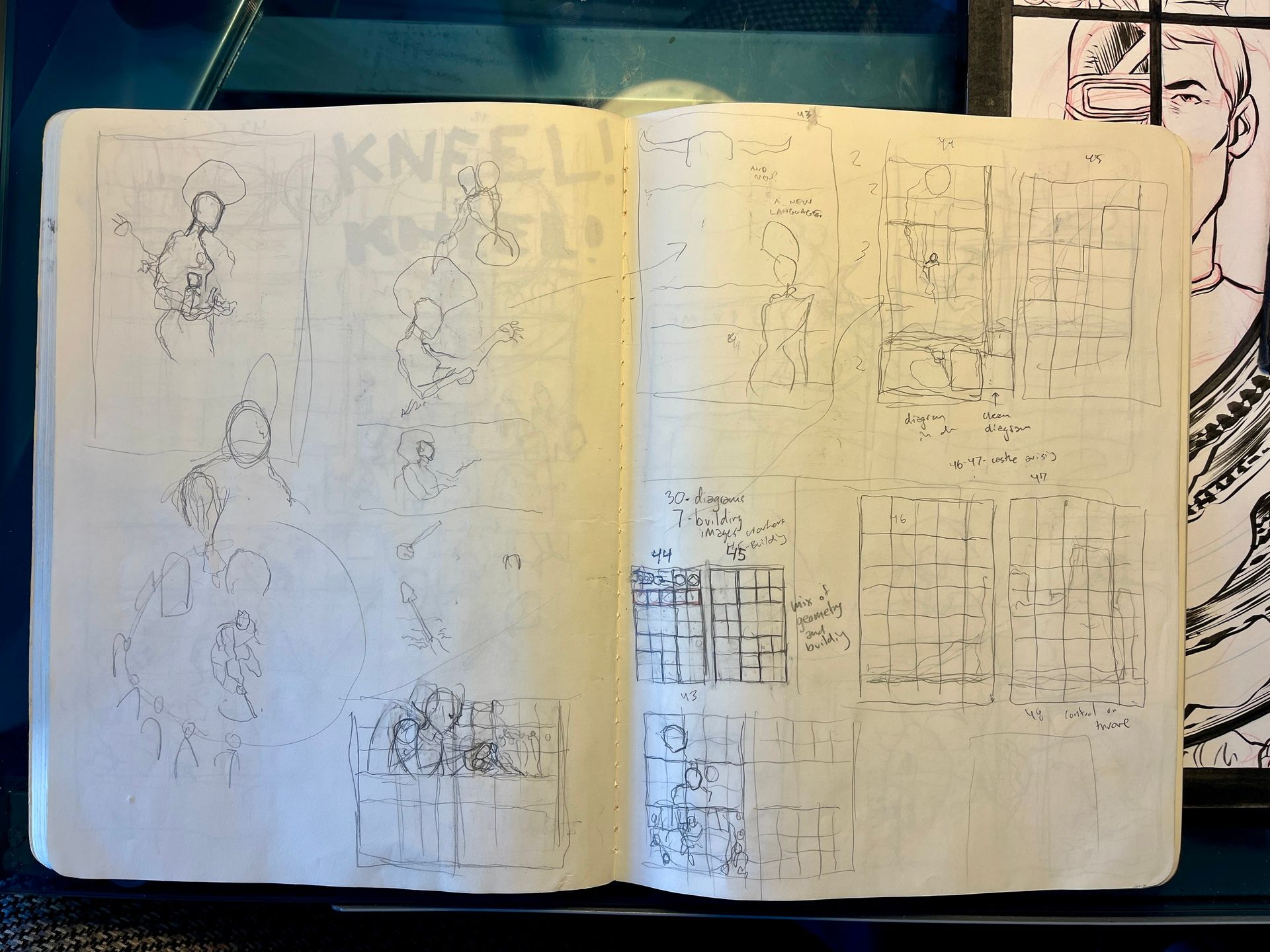
First pass of Drome
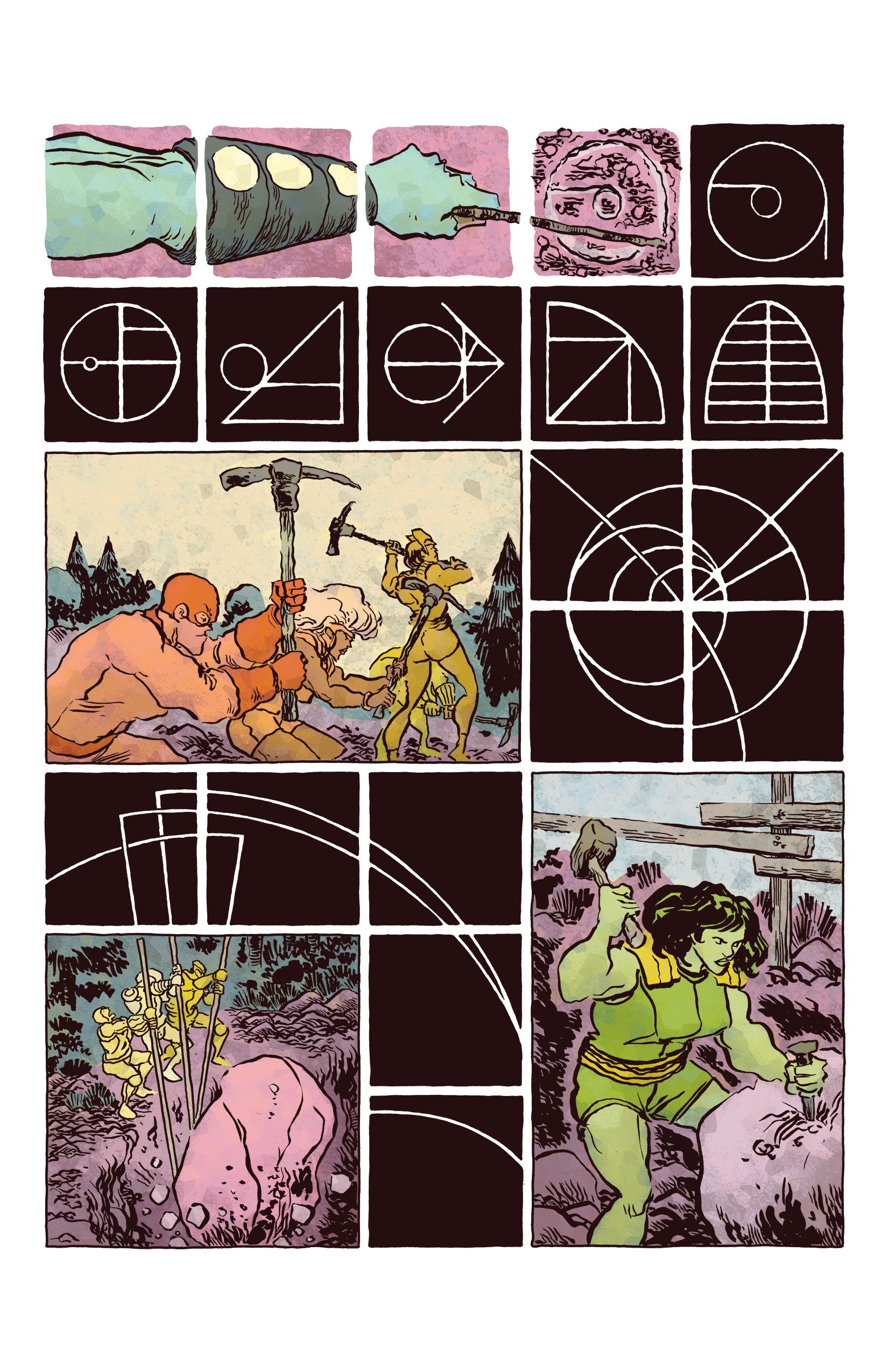
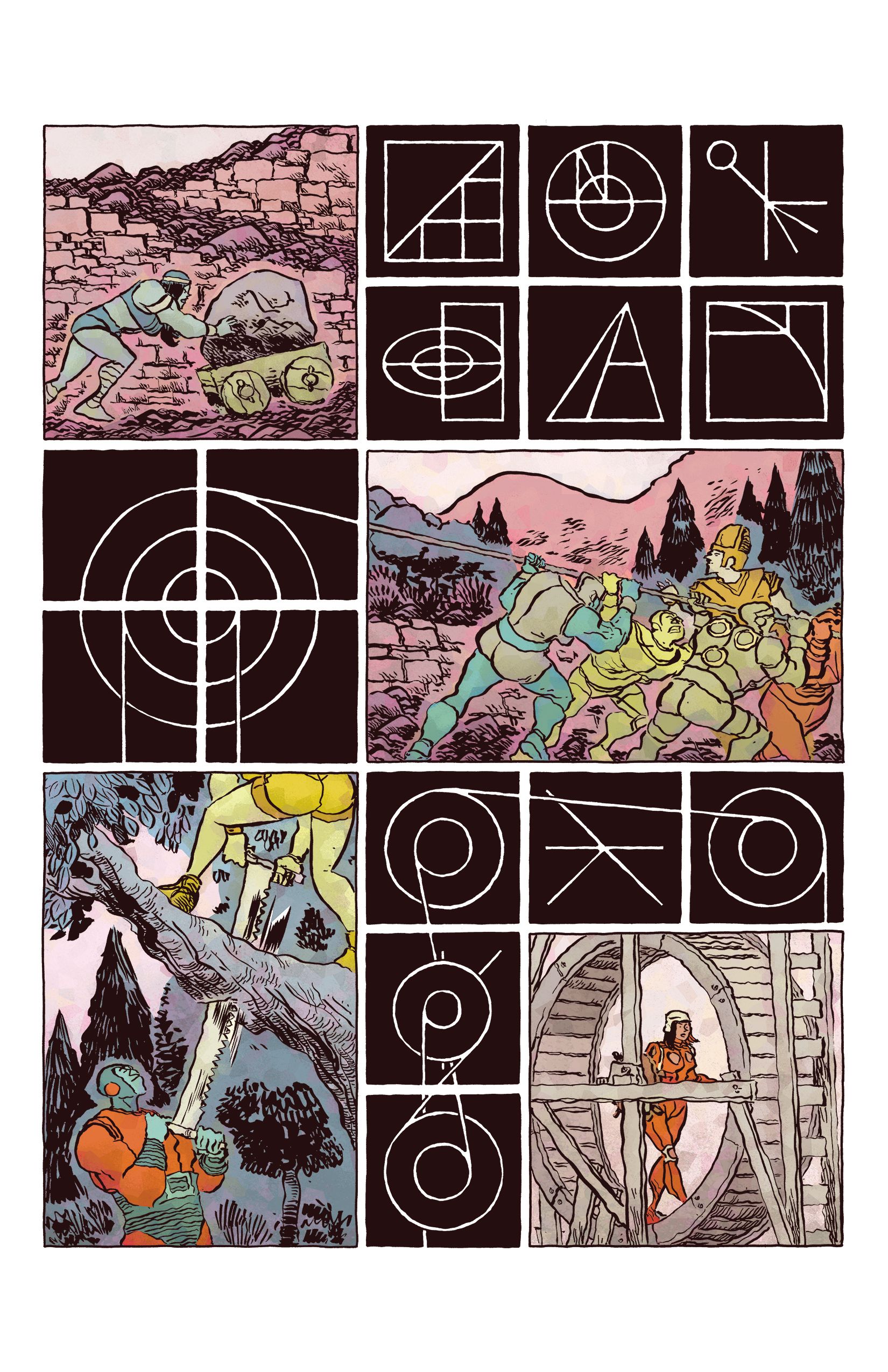
You moved the wood-cutting and building scenes to the next pages. Did you want to show the dangers of survival here? The shark attack panel is awesome. You get to see Blue in action, and also her faithful stand up for her. What did you want to show, and how did that evolve on the page?
I think without the added sections, Blue would come across as just a conqueror. She arrives. She dominates through physical strength alone. It would be very monotone, and I wanted to come across as more than that, so with these added sections, it shows her protecting the people and caring about them. She kills the snake. After killing the eagle, she comes to the aid of the person who had been attacked. With the shark, she attacks it, but also the people come to her aid. Through this sequence we see her relationship with the people grow. After the snake, the people just look on in awe, but don't interact with her. After the eagle, she and the people come to the aid of the injured person. After the shark, there are celebratory congratulations with her and the people. The relationship is much more than just conqueror and conquered.
There is also the aspect of wanting to show Blue being tested, something like the labors of Hercules. There has to be an idea of how strong she is before the story continues and she faces her later challenges. And I think there is a bit of fun both narratively and visually to be had in that.
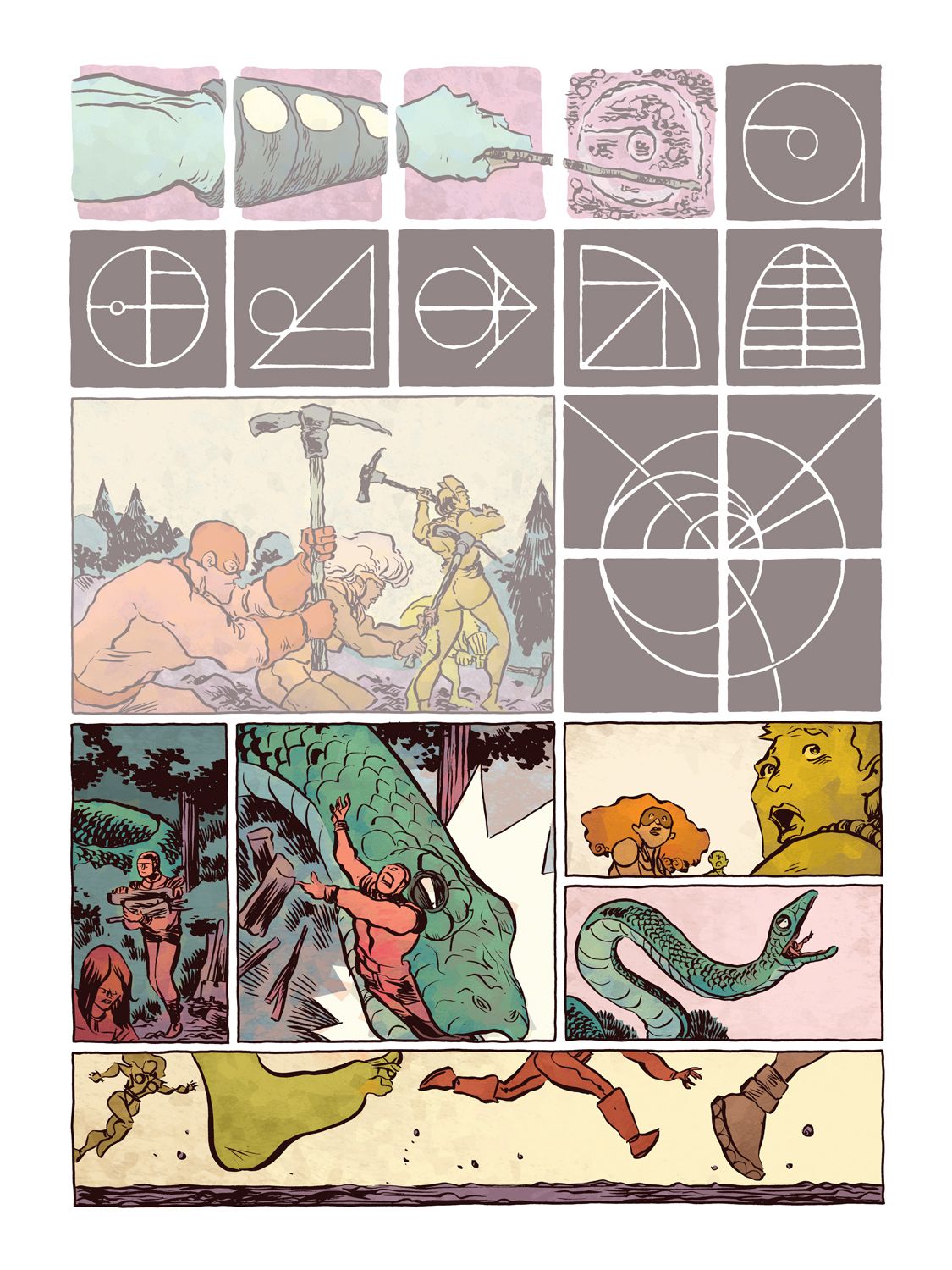
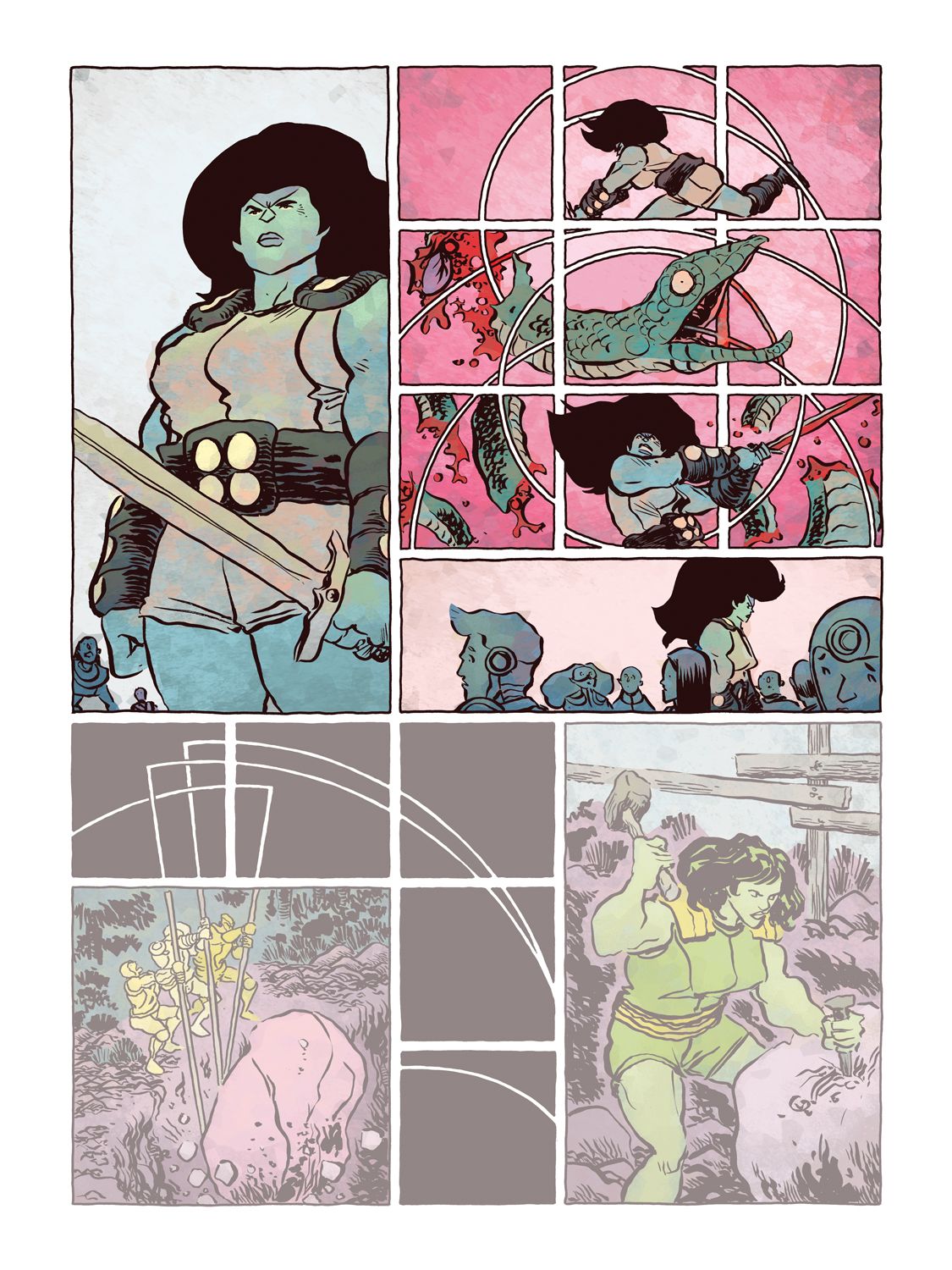
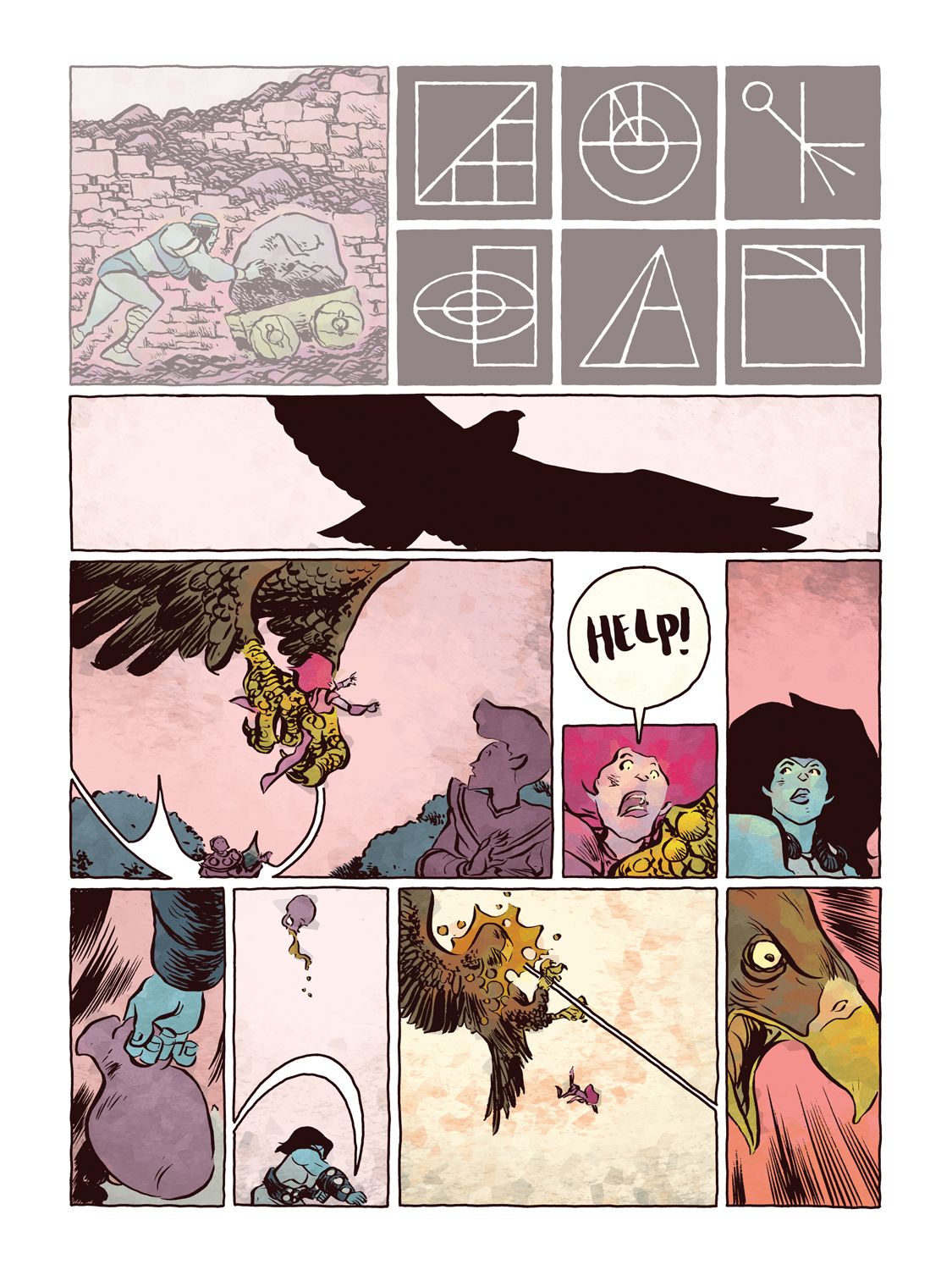
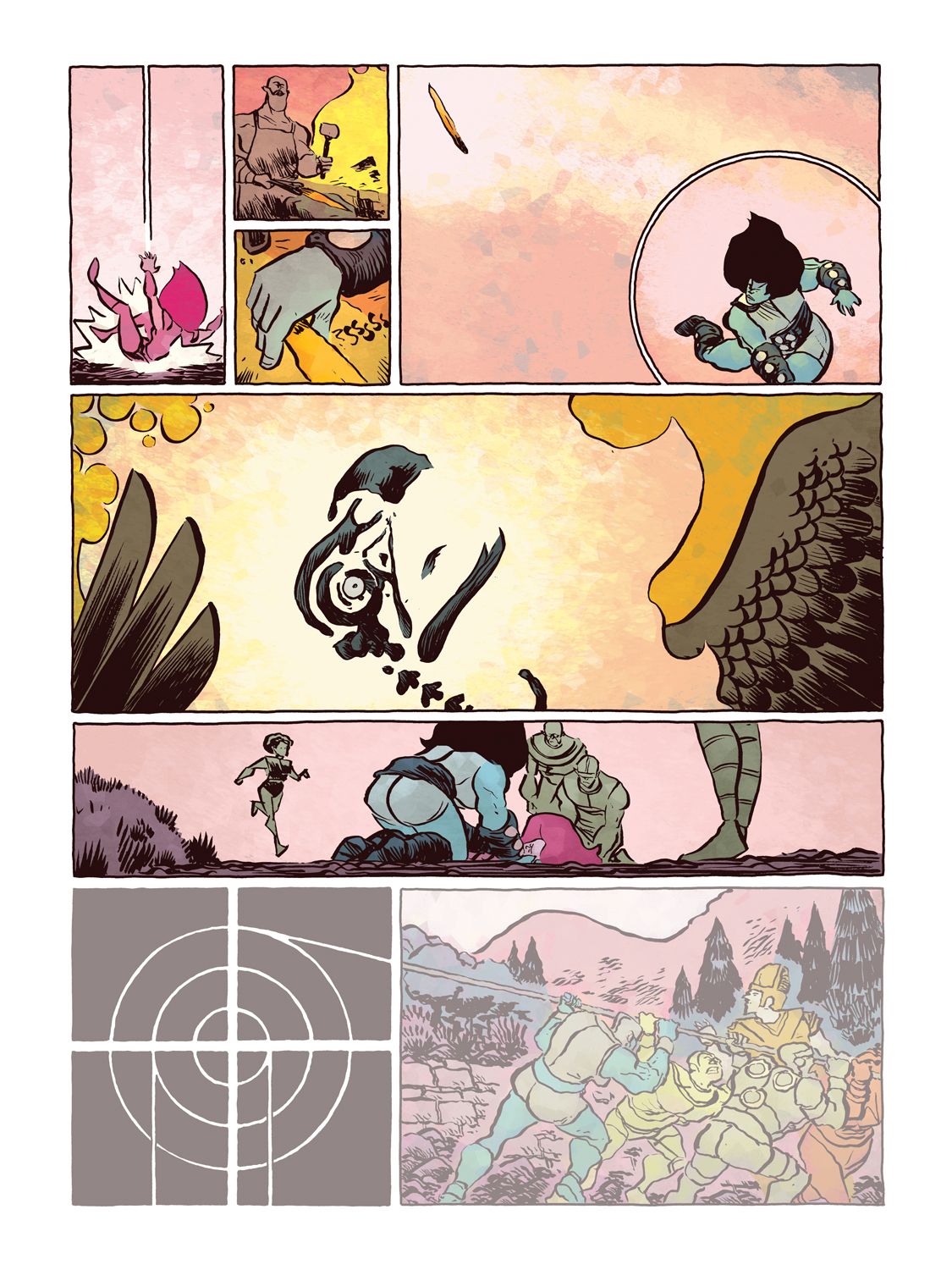
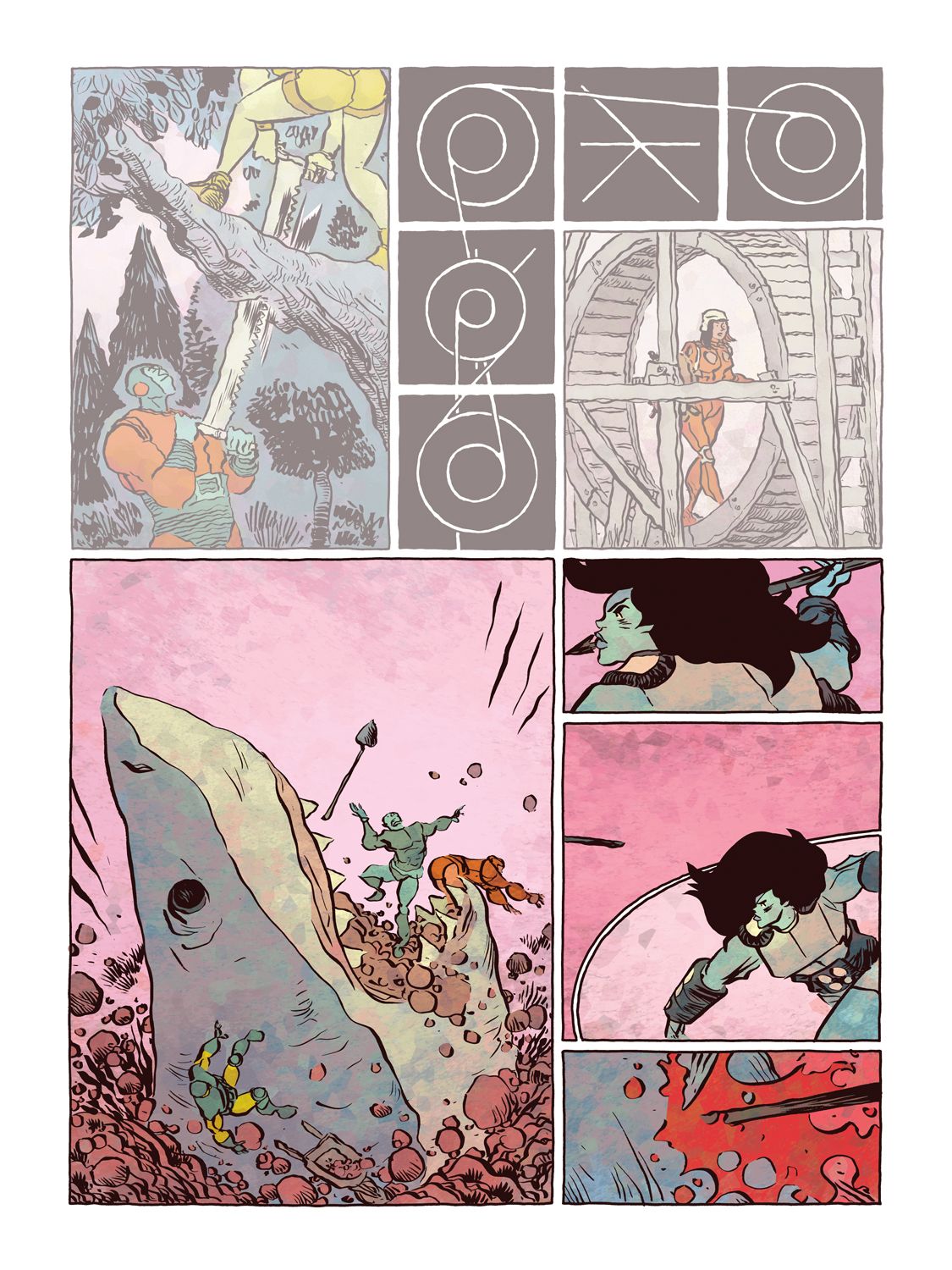
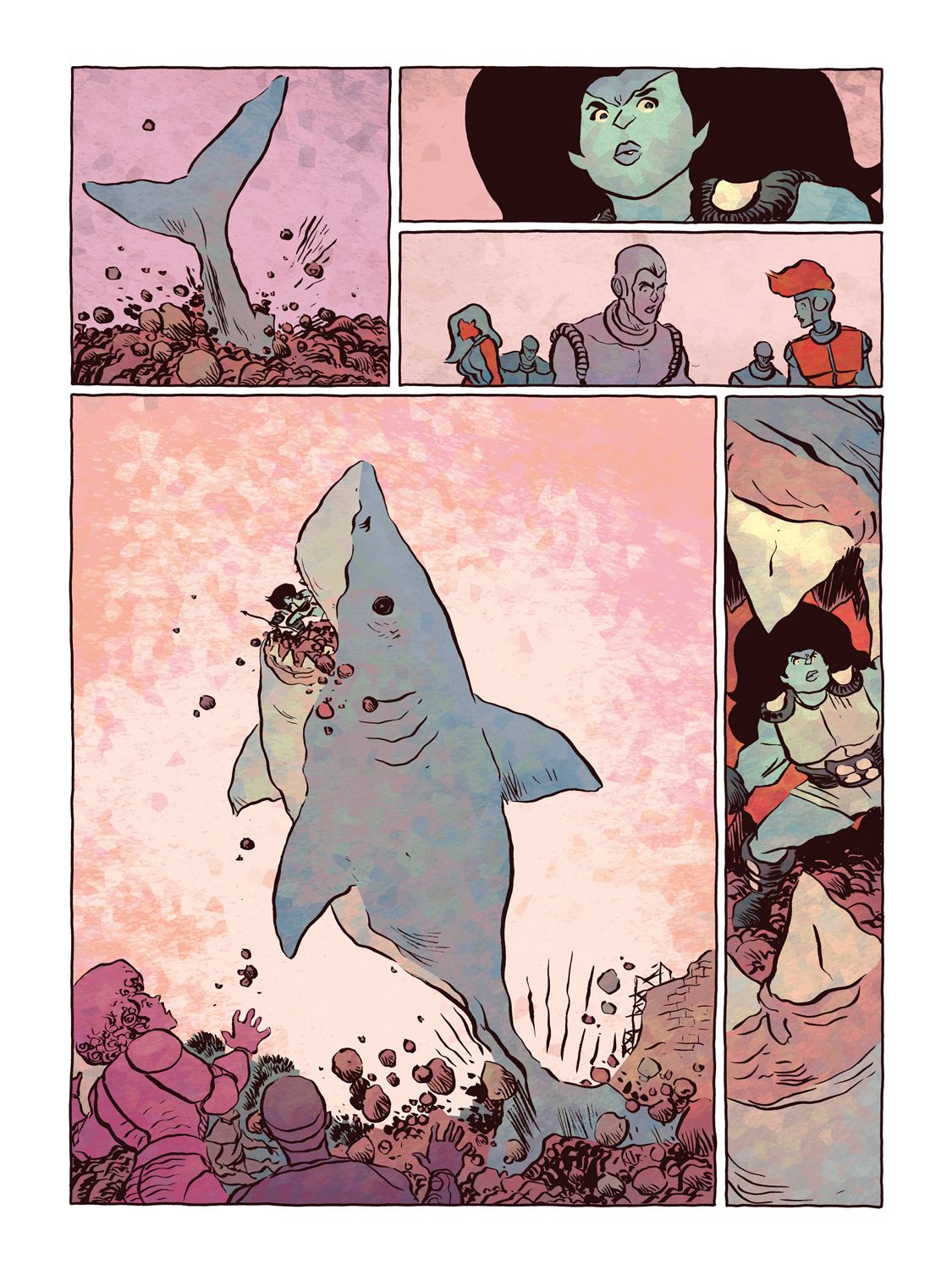
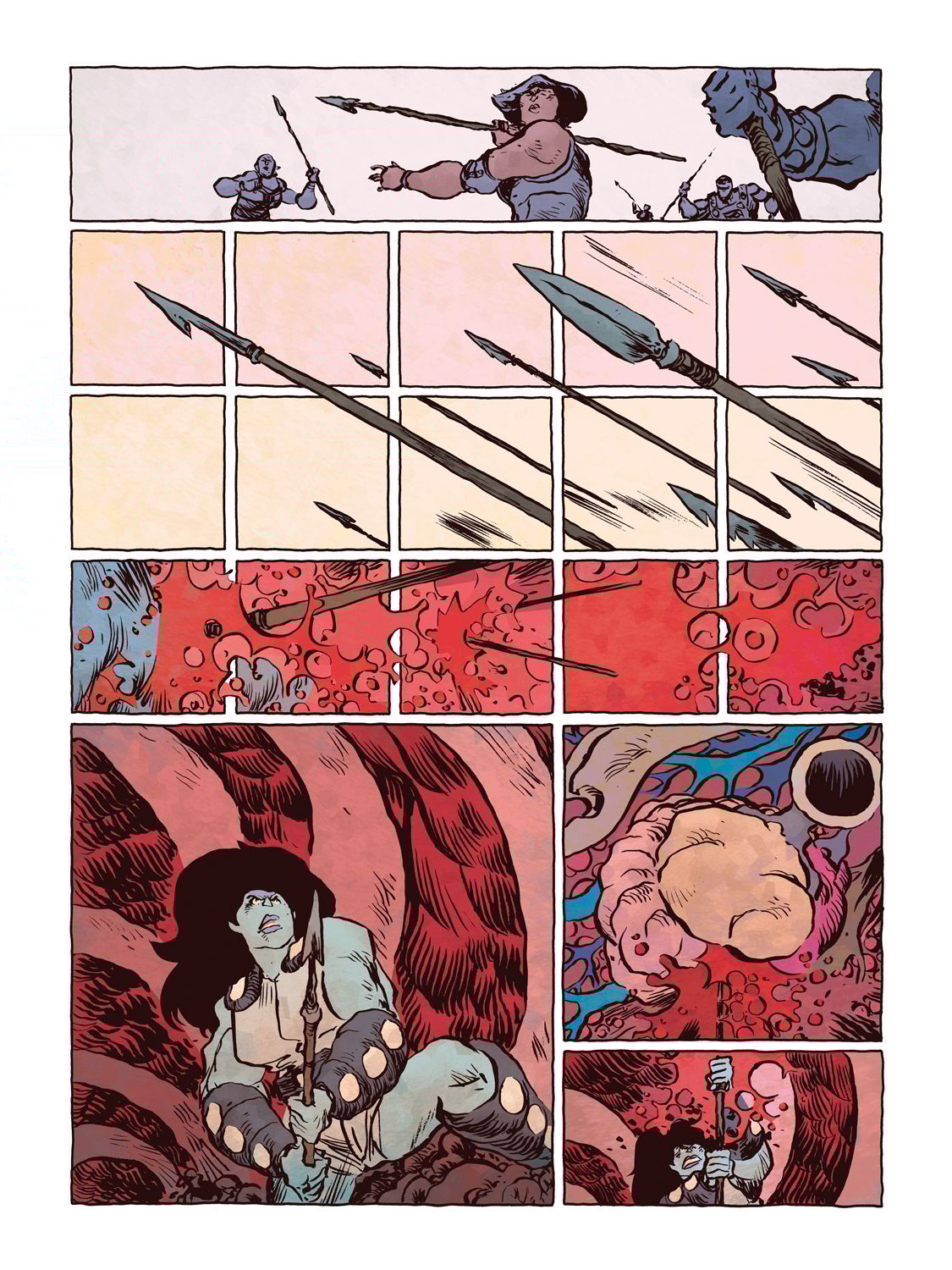
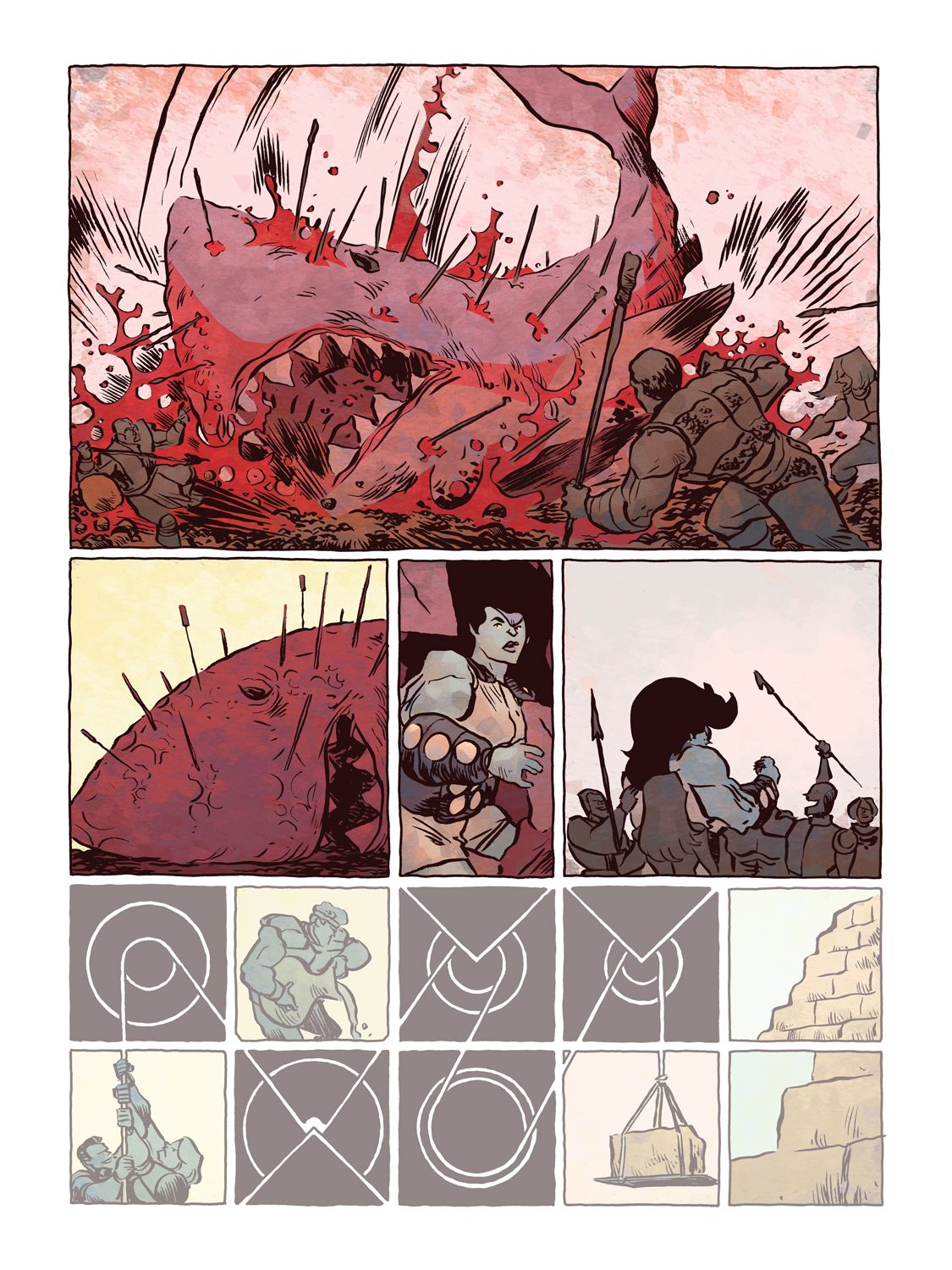
Now that the book is complete and out to the public, how do you feel about these specific pages? What do you think made them stand out among the rest?
I think one of the things that I find interesting about these pages is that the original version was drawn in 2020, while the additions were drawn in 2024 after I'd completed the bulk of the work on Drome. Over that time, my process had changed a bit, I was using different tools to ink, and my coloring process had become more refined. All of which, to my eyes, is very visible on the page, but I'd be surprised if a reader could pick it up. It's a cool thing, almost like a special effect in a movie.