- Comic Frontier
- Posts
- Stephanie Williams Just Made Comic Book History, So Why Didn't Major Comic Sites Notice?
Stephanie Williams Just Made Comic Book History, So Why Didn't Major Comic Sites Notice?

Liam McGuire
June 16, 2026

When the Eisner Awards — the comic book world’s equivalent to the Oscars — revealed their nominees, history was made. Stephanie Williams, author of Street Sharks (IDW); Roots of Madness (Ignition Press); Temporal (Mad Cave), was nominated for Best Writer. In the process, she became the first Black woman ever, and the second Black writer since 1995 - when Dwayne McDuffie was nominated for Icon — to score a coveted Best Writer nomination (she was also nominated for Best New Series for Temporal).

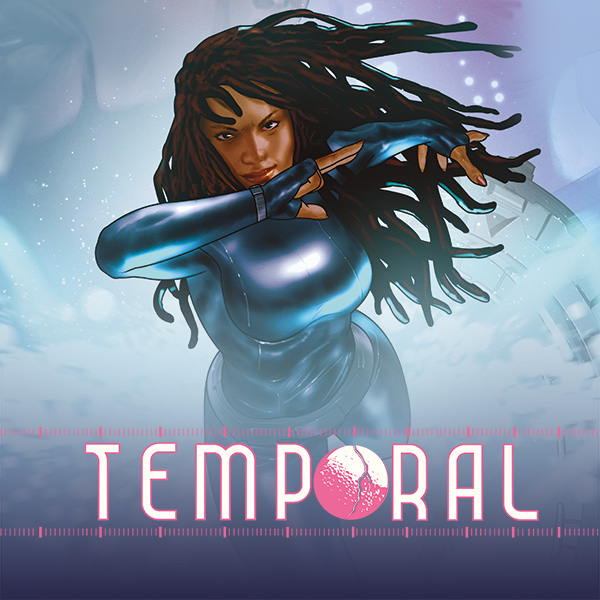
Yes, that’s more than 30 years between nominations. Yes, that’s a big deal. Yet, comic book sites (outside Black-led sites and podcasts) were largely quiet. In a media landscape where comic book sites often care more about clicks, Williams’ historic achievement was mostly ignored by mainstream comic sites. The talented writer said on Threads that the lack of coverage around her historic nominations (and other diverse creators getting nominated) was “pretty fucking ridiculous.” And she’s 100% correct. As someone who has worked on both sides of the comic book news cycle, history doesn’t seem to matter unless it drives traffic to websites - meaning Williams’ historic achievement barely made the rounds when it should have been an incredibly important story and moment.

I spoke with Williams about the lack of coverage, representation, and her thoughts on the current state of comic news amidst her historic nominations.
The lack of coverage of your historic Eisner noms - do you see that as a media issue? A lack of representation? Lack of Resources from said sites to do actual news and non-clickbait algorithmic stuff? All of the above?
Honestly, all of the above — and I'd push back gently on treating those as separate problems, because they feed each other. As much as some may try to downplay the importance and impact, representation matters, and it should never be limited to fictional characters on the page. It’s crucial to know who's in the room deciding what counts as "news" and what gets seen as historic in the first place. A milestone like the first Black woman nominated for Best Writer in the Eisners' 38-year history reads as obviously significant to some people and as a footnote to others, and which of those you are often comes down to whether the history is yours. When newsrooms don't reflect the breadth of the medium they cover, blind spots aren't malicious. They're structural, but they're still blind spots.
Now, layer the resources problem on top because that’s just as important. A lot of sites are running on skeleton crews and survive on traffic, so the incentive is to chase whatever the algorithm rewards — the big-two scoop, the casting rumors, and the biggest, the outrage cycle — and a nuanced piece about a historic nomination possibly doesn’t move numbers the same way. I would like to believe that it's not that anyone sat down and decided not to cover it. It's that the easy, fast, clickable thing wins by default, and stories that require context and care lose. What stood out to me is that the people who did show up were largely podcasts and Black-led outlets doing this for love, not for traffic, which tells you the appetite is there. The institutions just aren't built to meet it.
How can news sites actively improve when it comes to similar coverage?
The simple answer is to hire and pay Black writers and other underrepresented voices, and not just for Black History Month features. Build actual relationships with creators across the industry so milestones aren't a surprise you missed. Treat award nominations as news, not only as a hook for a review. And maybe an even simpler one — follow the people already doing the work. The podcasts and smaller outlets that covered this aren't hard to find. They were right there. If a major site genuinely doesn't know what's significant, the fix is partly humility. Amplify, credit, and pay the folks who caught what you didn't. None of this is charity. A more diverse, more curious newsroom just makes for better, more interesting coverage of the whole medium. And I feel like this applies beyond comics.
You mentioned on Threads, "All I know is that when this announcement happens for this long-awaited project I (a few more Black creators) have coming, preorders better be through the fucking roof." For those who don't know, why is pre-ordering important, and what can you say about the project without spoiling what it is?
Pre-orders are the single most powerful thing a reader has in comics, and most people don't realize it. Comics are largely ordered months in advance, so the numbers a book racks up before it ever hits a shelf are what publishers and retailers use to decide print runs. And to put it bluntly, whether a series lives or gets canceled. A book can be beloved and still die because the pre-orders didn't signal demand in time. So when readers say they want more diverse books, more Black-led titles, more creators like the ones who got these nominations, the most concrete way to back that up is to pre-order. It's a vote that the industry actually counts.
As for the project, it’s probably the worst-kept secret in comics right now. IYKY. What I can say is that a few other Black creators and I have been putting in serious work on things we care deeply about, and I hope readers show up for all of it. Beyond that, I'm not confirming the what or the where just yet, only that it’s coming much sooner than you think. But when the announcement lands, I mean what I said with love: “I want those pre-orders through the roof. Consider it a challenge because we want to give readers the stories they’re asking for.”


